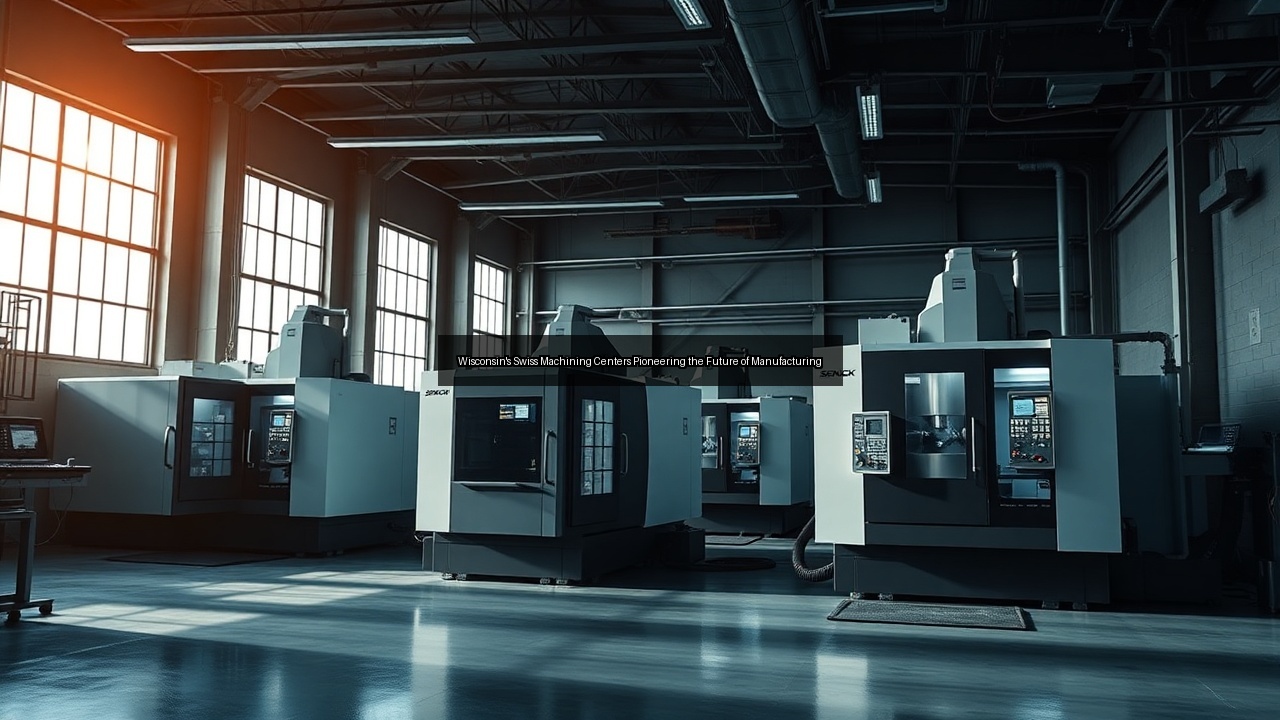
Wisconsin's Swiss Machining Centers Pioneering the Future of Manufacturing
The Evolution of Swiss Machining in Wisconsin
A Brief History of Swiss Machining
Wisconsin's journey into the realm of Swiss machining began in the mid-20th century, when manufacturers sought ways to enhance precision and efficiency in machining processes. Originating in Switzerland, this method gained worldwide acclaim for its ability to produce small, complex parts with exceptional accuracy. Early adopters in Wisconsin recognized the potential of Swiss precision machining, gradually integrating it into local industrial practices. Over the decades, as industries expanded and technology advanced, Wisconsin became a hub for these specialized machining centers, drawing on a skilled workforce and a culture of innovation. Today, Swiss machining stands as a testament to the state's adaptability and forward-thinking approach in the manufacturing sector.
The Role of CNC Technology in Precision Machining
CNC (Computer Numerical Control) technology revolutionized the field of precision machining, enhancing the capabilities of traditional Swiss machines. By automating the machining process, CNC systems improved speed, accuracy, and repeatability. CNC machining centers allow operators to program intricate designs that were once labor-intensive and time-consuming to produce manually. The combination of Swiss machining principles with CNC technology results in a seamless integration of speed and precision. In Wisconsin, this synergy has driven significant advancements in manufacturing, enabling companies to meet the growing demands of various industries while maintaining high levels of quality and efficiency.
Key Players: McCormick Industries and Their Impact
McCormick Industries has emerged as a pivotal player in the landscape of Wisconsin Swiss machining. Renowned for its commitment to quality and innovation, McCormick specializes in custom precision machining, producing a wide range of machined parts for various sectors. Their state-of-the-art CNC lathes and milling machines have set industry standards, driving competitors to adopt similar high-tech solutions. The company's focus on precision tolerances and customer satisfaction has positioned it as a leader in the field, influencing other manufacturers to adopt advanced techniques in their operations. McCormick Industries exemplifies Wisconsin's robust manufacturing ecosystem, showcasing the potential of Swiss machining in the modern era.
Technological Advancements in Swiss Precision Machining
The Functionality of CNC Lathes and Milling Machines
CNC lathes and milling machines play a crucial role in the Swiss precision machining landscape. Lathes, essential for shaping and cutting materials, allow for the production of intricate components with unparalleled accuracy. These machines operate by rotating the workpiece against a stationary cutting tool, enabling manufacturers to create complex geometries. On the other hand, CNC milling machines utilize a multi-axis approach to remove material from a stationary workpiece, offering flexibility in design and production. Together, these machines form the backbone of Swiss machining centers in Wisconsin, enabling companies to produce high-quality machined components that meet stringent industry specifications.
High-Precision Tolerances and Their Importance
High-precision tolerances are critical in the world of Swiss machining, where even the slightest deviation can lead to significant issues in product performance. Wisconsin's machining centers prioritize adherence to these tolerances, ensuring that every component meets exacting standards. Industries such as aerospace and automotive rely heavily on these precise measurements, as they directly impact the safety and functionality of the final product. By maintaining tight tolerances, manufacturers can enhance the reliability of machined parts, fostering trust and satisfaction among clients. This commitment to precision not only sets Wisconsin apart but also underscores the importance of investing in advanced technologies and skilled labor within the Swiss machining sector.
Innovations in Thread Rolling and Deburring Techniques
Innovations in thread rolling and deburring techniques have significantly improved the efficiency and quality of Swiss machining processes. Thread rolling, a cold-forming method, enhances the strength and durability of threaded components, making them ideal for high-stress applications in industries such as aerospace and automotive. This technique minimizes material waste and provides a superior finish compared to traditional cutting methods. Additionally, deburring techniques have evolved, with modern machines designed to remove sharp edges and imperfections with precision. These advancements not only streamline production but also contribute to the overall quality of Swiss machined components, reinforcing Wisconsin's reputation as a leader in precision machining.
Industry Applications of Swiss Machining Centers
Impact on the Aerospace Industry
Swiss precision machining plays a vital role in the aerospace industry, where safety and performance are paramount. Wisconsin's machining centers provide high-quality components that meet rigorous industry standards, ensuring the reliability of aircraft systems. From turbine blades to intricate fastening systems, the accuracy of Swiss machined parts directly influences the performance of aerospace applications. Companies in this sector benefit from the advanced capabilities of CNC machining, which allows for the production of lightweight yet strong components essential for modern aircraft. The partnership between Wisconsin's Swiss machining centers and the aerospace industry illustrates the importance of precision engineering in advancing aviation technology.
Advancements in Telecommunications and Electronics
The telecommunications and electronics industry has also experienced significant advancements due to the precision offered by Swiss machining. Wisconsin's machining centers produce complex components such as connectors, housings, and circuit boards that are integral to the functionality of electronic devices. The ability to achieve tight tolerances and intricate designs allows manufacturers to create products that cater to the fast-paced demands of the tech industry. As the electronics sector continues to evolve, the reliance on high-quality Swiss machined components will only increase, solidifying Wisconsin's position as a key player in this high-tech arena.
Role in Automotive Manufacturing and Optics
In the automotive sector, Swiss machining contributes to the production of high-performance components that enhance vehicle safety and efficiency. From precision-engineered parts such as fuel injectors to complex assemblies, Wisconsin's machining centers deliver solutions that meet the industry's exacting standards. Similarly, the optics industry benefits from Swiss precision machining, producing lenses and other optical components with unmatched accuracy. The collaboration between these sectors and Wisconsin's Swiss machining centers showcases the versatility and importance of precision engineering in driving innovation across multiple fields.
The Future of Swiss Machining in Wisconsin
Trends in Custom Precision Machining
The future of Swiss machining in Wisconsin points towards a growing trend in custom precision machining. As industries increasingly demand tailored solutions, machining centers are investing in advanced technologies and skilled labor to meet these needs. Customization allows manufacturers to address specific challenges faced by clients in various sectors, fostering innovation and collaboration. This trend not only enhances the competitiveness of Wisconsin's machining landscape but also positions local companies as leaders in the global market for Swiss machined components. Embracing customization will be essential for maintaining relevance in a rapidly evolving manufacturing environment.
Sustainability and High-Tech Solutions
Sustainability has become a crucial focus for Wisconsin's Swiss machining centers, with many manufacturers adopting eco-friendly practices and high-tech solutions. By minimizing waste through efficient CNC machining processes and utilizing sustainable materials, companies can reduce their environmental impact while maintaining quality. The integration of advanced technologies, such as IoT and AI, further enhances efficiency and resource management. As consumers increasingly prioritize sustainable products, Wisconsin's commitment to environmentally responsible manufacturing will play a significant role in shaping the future of the Swiss machining industry.
Collaborative Opportunities within the Manufacturing Sector
Collaboration among various players in the manufacturing sector presents exciting opportunities for the future of Swiss machining in Wisconsin. As companies seek to innovate and streamline processes, partnerships can foster knowledge sharing and technology transfer. Collaborative efforts between educational institutions and industry leaders can also cultivate a skilled workforce equipped to tackle emerging challenges. By leveraging these partnerships, Wisconsin's Swiss machining centers can enhance their capabilities and remain competitive in a global marketplace increasingly defined by technological advancement and precision engineering.
See Also
- A Look Inside McCormick Industries and Their Swiss Machining Capabilities
- CNC Turning vs. CNC Milling Discovering Wisconsin's Machining Expertise
- The Evolution of CNC Machining Centers in Wisconsin's Manufacturing Scene
- Welding Innovations in Swiss Precision Machining from Wisconsin
- Precision Redefined The Art of Swiss Machining in Wisconsin